Traumatic Experiences of Normal Development
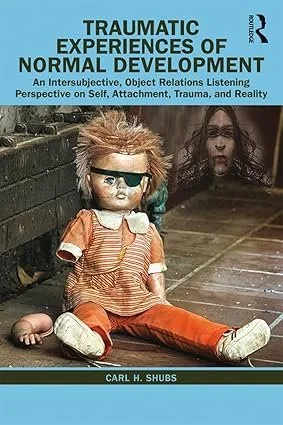
I am excited to tell you that I have written a new book about trauma: Traumatic Experiences of Normal Development: An Intersubjective, Object Relations Listening Perspective on Self, Attachment, Trauma, and Reality, published by Amazon and Routledge and released in March, 2020. It presents a redefinition of trauma, a new psychoanalytic perspective on trauma entailing a reconstruction of psychoanalytic thought and practice, an integration with relational and intersubjective approaches, as well as a recognition of how those experiences manifest in the body. It addresses traumatic experiences of all kinds and examines how those incidents have roots in normal development and how they are significant factors in the development and persistence of personality organization and such things as addictions, eating disorders, infidelities/affairs, and relational patterns.
It is relevant to many experiences, as it addresses our understanding of crisis, trauma, and the relationships between present and past experiences. It presents a frame of reference—a listening stance—that helps us to more deeply understand the roots of how individuals uniquely process the events they are confronted with and how we can be more effective in helping them.
About the Book
Traditionally, trauma has been defined as negatively impacting external events, with resulting damage. This book puts forth an entirely different thesis: trauma is universal, occurring under even the best of circumstances and unavoidably sculpting the very building blocks of character structure.
In Traumatic Experiences of Normal Development, Dr. Carl Shubs depathologizes the experience of trauma by presenting a listening perspective which helps recognize the presence and effects of traumatic experiences of normal development (TEND) by using a reconstruction of object relations [psychoanalytic] theory. This outlook redefines trauma as the breach in intrapsychic organization of Self, Affect, and Other (SAO), the three components of object relations units, which combine to form intricate and changeable constellations that are no less than the total experience of living in any given moment. Bridging the gap between the trauma and analytic communities, as well as integrating intrapsychic and relational frameworks, the SAO/TEND perspective provides a trauma-based band of attunement for attending to all relational encounters including those occurring in therapy.
Though targeted to mental health professionals, this book will help enable therapists and sophisticated lay readers alike to recognize the impact of relational encounters, providing new tools to understand the traumas we have experienced and to minimize the hold they have on us.
Reviews
Lawrence E. Hedges, Ph.D., Psy.D., ABPP
—Listening Perspectives Study Center, Founder and Director, and author of numerous books on psychoanalysis.
Carl Shubs has done it again! In his prior writings on transference and countertransference with trauma victims, using somatic therapies as well as psychoanalytic psychotherapy, Shubs has demonstrated a remarkable capacity to stand in many theoretical and clinical worlds at once. His unique gift is to understand and be able to effectively integrate in highly original ways numerous schools of psychoanalytic thinking as well as neuropsychological studies, infant research, and somatic psychotherapy practices.
In this tour de force through the complex world of developmental, neuropsychological, and trauma studies, Shubs makes clear that all of the features described in pathological trauma situations are also to one degree or another a part of normal development.
Robert Hilton, Ph.D.
—Co-founder of the Southern California Institute for Bioenergetic Analysis (SCIBA) and Trainer Emeritus of the International Institute for Bioenergetic Analysis (IIBA).
In this volume, Traumatic Experiences of Normal Development, Dr. Shubs has produced an encyclopedic work on the title subject. He brings to the task his understanding that comes from his clinical experience of working for decades with victims of violent crimes. In addition, he provides, in their own words, the personal theories and interpretations of the leading authorities in the field.
His research comes from a personal, theoretical, and experiential base. This is no more evidenced than in a poem he wrote, “To Be in a Closet,” which he inserts at the beginning of his work, where he says, “The final version [of the poem] grew out of my self-awareness regarding my own array of closets and my knowing that each of us has them.”
This book is an invaluable resource for anyone working with the impact of traumatic experience on their clients or themselves.